






🔗 Affiliate Disclosure
I am a certified nutritionist, but I am not your doctor. The following information is based on my professional experience and personal journey healing from chronic pain. Always consult with a healthcare provider before making significant changes to your diet, especially if you have a history of disordered eating or metabolic conditions.
I ran the numbers. The results on how to know how much calories in food were… unexpected. Actually, they were kind of a wake-up call. Back when I was working 80-hour weeks in corporate marketing, I lived on those “healthy” pre-packaged salads from the deli downstairs in Santa Monica. I thought I was being so disciplined, carefully adding up the numbers on the back of the plastic containers. I was exhausted, my joints ached, and despite “eating right,” I felt like a shell of a person.
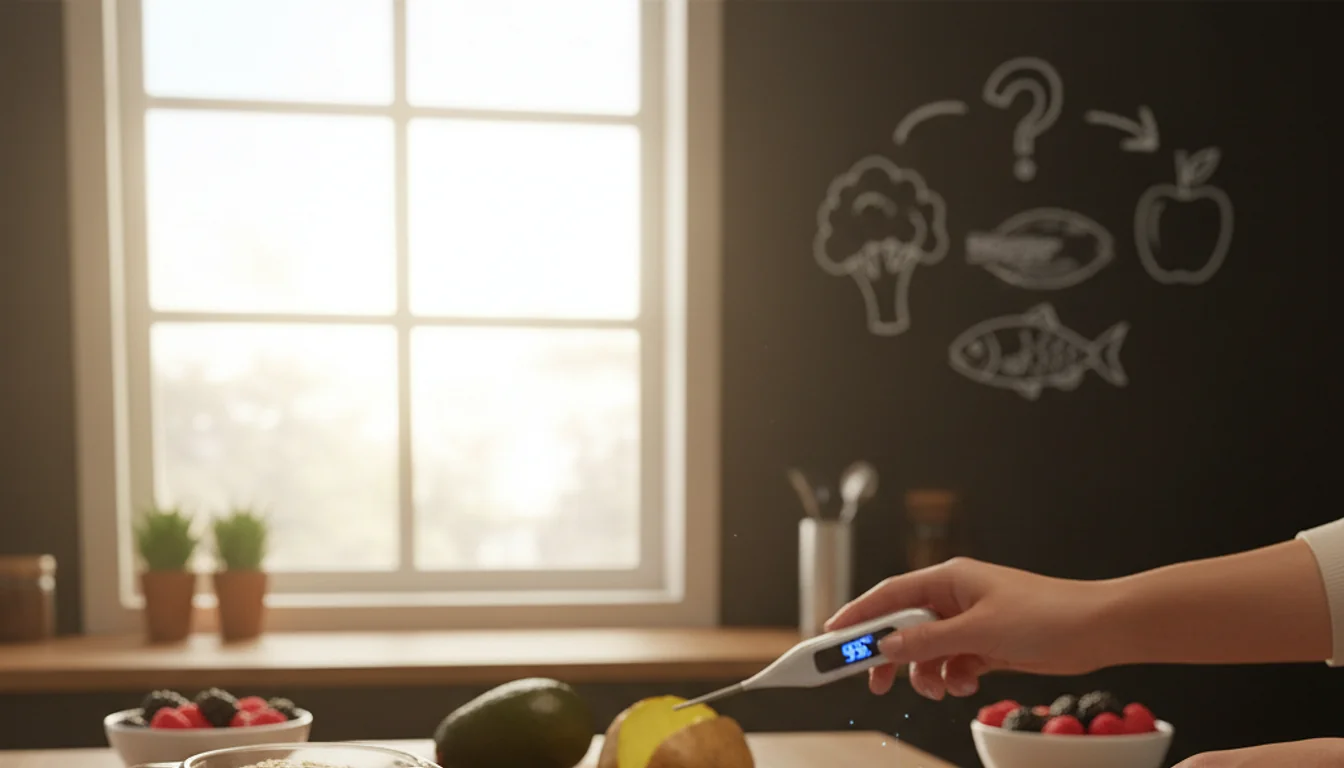
To know how much calories are in food, you need to: 1) Master the art of reading labels (while knowing their flaws), 2) Use a high-quality digital food scale for home-cooked meals, 3) Tap into 2026 AI-powered tracking apps, and 4) Learn to estimate volume using hand-portion guides when dining out. Understanding these four pillars turns calorie counting from a stressful guessing game into a manageable tool for your health.
One Tuesday morning last month, I was sitting at a cafe on Montana Avenue, watching a friend try to log her avocado toast. She was stressed. “Is this 400 calories or 800?” she asked, her voice tight. It reminded me of my own burnout era. We’ve been taught that these numbers are absolute truths, but the reality is much more fluid. Since transitioning from corporate burnout to a certified nutritionist, I’ve learned that knowing what’s in your food is less about math and more about awareness. Really. It’s about knowing which numbers to trust and which ones to take with a grain of sea salt.
Quick Summary: Knowing the calories in your food requires a mix of label literacy, digital tools, and portion estimation. While FDA guidelines allow a 20% margin of error on labels, using a digital scale ($23.47) and modern AI apps can significantly improve accuracy. However, the most important “number” is how the food makes you feel.
The Truth About Labels: Why the Numbers Might Be Lying to You
When you pick up a protein bar at the store, you see “220 calories” printed in bold. You believe it. I used to believe it too. But here’s the thing: according to FDA guidelines, companies have a 20% margin of error for the calorie counts listed on their labels. That means your 220-calorie snack could actually be 264 calories. Over a day of eating packaged foods, those “invisible” calories add up quickly.
I first realized this when I started working with clients in my Santa Monica practice. We’d look at their logs and realize they were doing everything “right,” yet their progress was stalled. We had to look closer at how these numbers are even calculated. Most companies use the Atwater system, which assigns average values to protein, fats, and carbs. It’s an old system—it doesn’t account for how your specific body digests fiber or resistant starch.
How to Read a Label Like a Nutritionist
To get a more accurate picture, don’t just look at the big calorie number. Check the serving size first. I once ate an entire bag of “healthy” kale chips only to realize the bag contained 3.5 servings. I felt so betrayed! To be honest, it was a classic rookie mistake. Now, I tell my clients to focus on the ingredient list first. If the first three ingredients are sugar or refined oils, that “low calorie” count isn’t doing you any favors in terms of satiety.
If you want a deeper dive into this, I wrote about how I stopped trusting labels in 2025 and what I look for instead. It’s been a total shift in my perspective on nutrition.
💡 Pro Tip Always check the weight in grams on the label rather than just the volume (like “1/2 cup”). Volume is subjective; weight is objective.
The Digital Scale: Your Most Honest Kitchen Companion
If you really want to know how much calories are in food you cook at home, you need a scale. I know, I know—it sounds obsessive. I used to think people who weighed their food were “one of those people.” But after my $200k burnout, I realized that my “guesstimates” were way off. Specifically with peanut butter. A “tablespoon” of peanut butter is almost never actually a tablespoon.
I bought my current scale—a sleek, stainless steel Greater Goods model—for exactly $23.47 on Amazon. It changed my life. Not because I weight everything every single day, but because it calibrated my eyes. I realized my “handful” of almonds was actually 300 calories, not 150. That’s a huge difference when you’re trying to heal your metabolism.
Step-by-Step for Accurate Home Tracking
- Place your plate or bowl on the scale and hit “tare” to zero it out.
- Add your ingredients one by one, recording the weight in grams.
- Don’t forget the “invisible” ingredients like the olive oil you used to sauté the onions or the splash of cream in your coffee.
- Use a reliable database like Nutritionix or Cronometer to find the caloric density per gram.
⚠️ Warning: Be careful not to let the scale become a source of anxiety. Use it as a learning tool for a few weeks to train your brain, then try to eat more intuitively.
Modern Tech: AI and CGMs in 2026
We’ve come a long way from the clunky apps of five years ago. In 2026, the tech has become much more integrated. I’ve recently been experimenting with AI-powered photo logging. You just snap a picture of your plate, and the AI estimates the volume and ingredients. It’s not 100% perfect yet, but it’s remarkably close—usually within 10-15% of the actual count.
There’s also been a huge surge in Continuous Glucose Monitors (CGMs). A 2026 study published in the Journal of Personalized Nutrition found that people using CGMs were 40% more likely to understand how specific foods impacted their energy levels compared to those just counting calories. I tried one last March, and it was fascinating. It turns out that for me, a “healthy” brown rice bowl spiked my sugar more than a small piece of sourdough bread. This kind of data helps you understand how they actually know how many calories are in food and how your body uses them.

The Hand-Portion Method: Estimating When You’re Out
What do you do when you’re at a dinner party or a restaurant in Venice Beach and there’s no label in sight? You can’t exactly whip out a scale without looking a bit intense. This is where the hand-portion method comes in. It’s a trick I learned during my nutrition certification, and it’s surprisingly effective. It relies on the fact that your hand size is usually proportional to your body size.
I remember being at a wedding in Ojai last summer. The buffet was incredible, and I saw a guest struggling to log her plate into an app. I leaned over and showed her the hand trick. She looked so relieved! It took the “math” out of the celebration. To be honest, we often overcomplicate things when our bodies already have the tools we need.
The “Handy” Guide to Calories
- Your Palm: Roughly 3-4 oz of protein (e.g., chicken, fish, tofu). Usually 150-250 calories.
- Your Closed Fist: Roughly 1 cup of veggies or fruit. Usually 30-80 calories for veggies.
- Your Cupped Hand: Roughly 1/2 cup of carbs (e.g., rice, pasta, potatoes). Usually 100-150 calories.
- Your Entire Thumb: Roughly 1 tablespoon of fats (e.g., oils, butter, nut butters). Usually 100-120 calories.
Using this method, you can quickly scan a plate and realize that the “small” side of pasta is actually three cupped hands—or about 450 calories. It’s about empowerment, not restriction. If you want to know more about the bigger picture of tracking, check out my guide on whether is tracking macros actually worth it in 2026.
Common Mistakes That Skew Your Numbers
Even with the best tools, it’s easy to get the numbers wrong. The most common mistake I see? Forgetting the “cooking tax.” When you cook meat, it shrinks. When you cook pasta, it expands. If you weigh 100g of raw chicken and log it as “cooked chicken,” your calorie count will be way off because 100g of cooked chicken is much denser in calories than 100g of raw chicken.
Another big one is the “health halo.” We tend to underestimate the calories in foods we perceive as healthy. I once had a client who was snacking on “organic, raw, gluten-free” energy balls. She thought they were about 100 calories each. When we actually looked at the ingredients—mostly dates and coconut oil—they were closer to 280 calories each. She was eating three a day! That’s nearly 900 calories in snacks alone. that said,, she wasn’t “failing”; she just didn’t have the right information.

📊 According to a 2025 study from the University of California, individuals underestimate their daily caloric intake by an average of 450 calories when they don’t use tracking tools.
✅ Key Takeaways
- Labels have a 20% margin of error; use them as a guide, not gospel. – Invest in a digital scale ($20-$30) to calibrate your “eye” for portions. – Use the hand-portion method (Palm = Protein, Thumb = Fat) for social settings. – Account for cooking changes (raw vs. cooked weight) to avoid common errors. – Focus on how food makes you feel, not just the digits on a screen.
If past me could read this… things would’ve been different. I wouldn’t have spent years stressed out over a plastic container of pasta salad or felt like a failure because the math didn’t seem to add up. Knowing how much calories are in food is a skill, like learning a language. It takes time, a bit of trial and error, and a lot of self-compassion. Now, I use these numbers as data points to help me feel my best, not as a cage to keep me small. You can do the same.
{
“”: ”
“”: “FAQPage”,
“mainEntity”: [
{
“”: “Question”,
“name”: “❓Is it possible to know the exact calories in a restaurant meal?”,
“acceptedAnswer”: {
“”: “Answer”,
“text”: “Honestly? No. Even if they provide a nutrition guide, the chef might add an extra tablespoon of butter or a heavier pour of oil that day. In my experience, it’s safest to add a \”buffer\” of about 15-20% to restaurant calories if you’re trying to be precise. I usually just enjoy the meal and focus on protein and fiber to stay full.”
{
“”: “Question”,
“name”: “❓What’s the best free app for checking calories in 2026?”,
“acceptedAnswer”: {
“”: “Answer”,
“text”: “I personally recommend Cronometer. I’ve used it since my burnout recovery in 2023. Unlike other apps, their database is verified, meaning you won’t find 50 different entries for \”one apple\” that all have different calorie counts. It’s much more reliable for people who want accuracy without the fluff.”
{
“”: “Question”,
“name”: “❓How do I count calories in a homemade soup or stew?”,
“acceptedAnswer”: {
“”: “Answer”,
“text”: “This used to drive me crazy! The best way is to create a \”Recipe\” in your tracking app. Weigh every raw ingredient as you put it in the pot. Then, weigh the final total weight of the soup. If the whole pot is 2000g, and you eat 400g, you’re eating 20% of the total calories. It takes an extra 5 minutes, but it’s the only way to be sure.”
{
“”: “Question”,
“name”: “❓Do calories from fiber count the same as sugar?”,
“acceptedAnswer”: {
“”: “Answer”,
“text”: “Technically, most fiber is listed as 4 calories per gram, but your body doesn’t actually absorb all of it. Soluble fiber provides about 2 calories per gram, and insoluble fiber provides almost zero. This is why many people in 2026 track \”net carbs\” (total carbs minus fiber). From my perspective, focusing on high-fiber foods is a \”cheat code\” for feeling full on fewer calories.”
{
“”: “Question”,
“name”: “❓Should I track the calories I burn through exercise?”,
“acceptedAnswer”: {
“”: “Answer”,
“text”: “I’m going to be blunt: most fitness trackers (like watches) overestimate calorie burn by up to 30%. I’ve seen clients eat back their \”exercise calories\” and wonder why they aren’t losing weight. I suggest treating exercise as a bonus for your heart and mood, rather than a reason to eat more, unless you’re an elite athlete training for hours a day.”
{
“@context”: “https://schema.org”,
“headline”: “How I Finally Decoded the Numbers: A 2026 Guide on How to Know How Much Calories in Food”,
“description”: “How I Finally Decoded the Numbers: A 2026 Guide on How to Know How Much Calories in Food”,
“image”: [
“https://www.trendynutritionhub.com/wp-content/uploads/2026/03/how_to_know_how_much_calories_in_food_cover.webp”
],
“datePublished”: “2026-03-18T01:04:54.196Z”,
“dateModified”: “2026-03-18T01:04:54.196Z”,
“author”: {
“@type”: “Person”,
“name”: “trendynutritionhub”
},
“publisher”: {
“@type”: “Organization”,
“name”: “Site Publisher”,
“logo”: {
“@type”: “ImageObject”,
“url”: “”
}
},
“mainEntityOfPage”: {
“@type”: “WebPage”,
“@id”: “”
},
“speakable”: {
“@type”: “SpeakableSpecification”,
“cssSelector”: [
“h1”,
“.tldr-box”,
“.definition-block”,
“.stat-highlight”,
“h2”,
“.key-takeaways”
]
},
“@type”: “Article”
}
{
“@context”: “https://schema.org”,
“@type”: “BreadcrumbList”,
“itemListElement”: [
{
“@type”: “ListItem”,
“position”: 1,
“name”: “Home”,
“item”: “https://example.com”
},
{
“@type”: “ListItem”,
“position”: 2,
“name”: “Nutritional Know-How”
},
{
“@type”: “ListItem”,
“position”: 3,
“name”: “How I Finally Decoded the Numbers: A 2026 Guide on How to Know How Much Calories in Food”
}
]
}