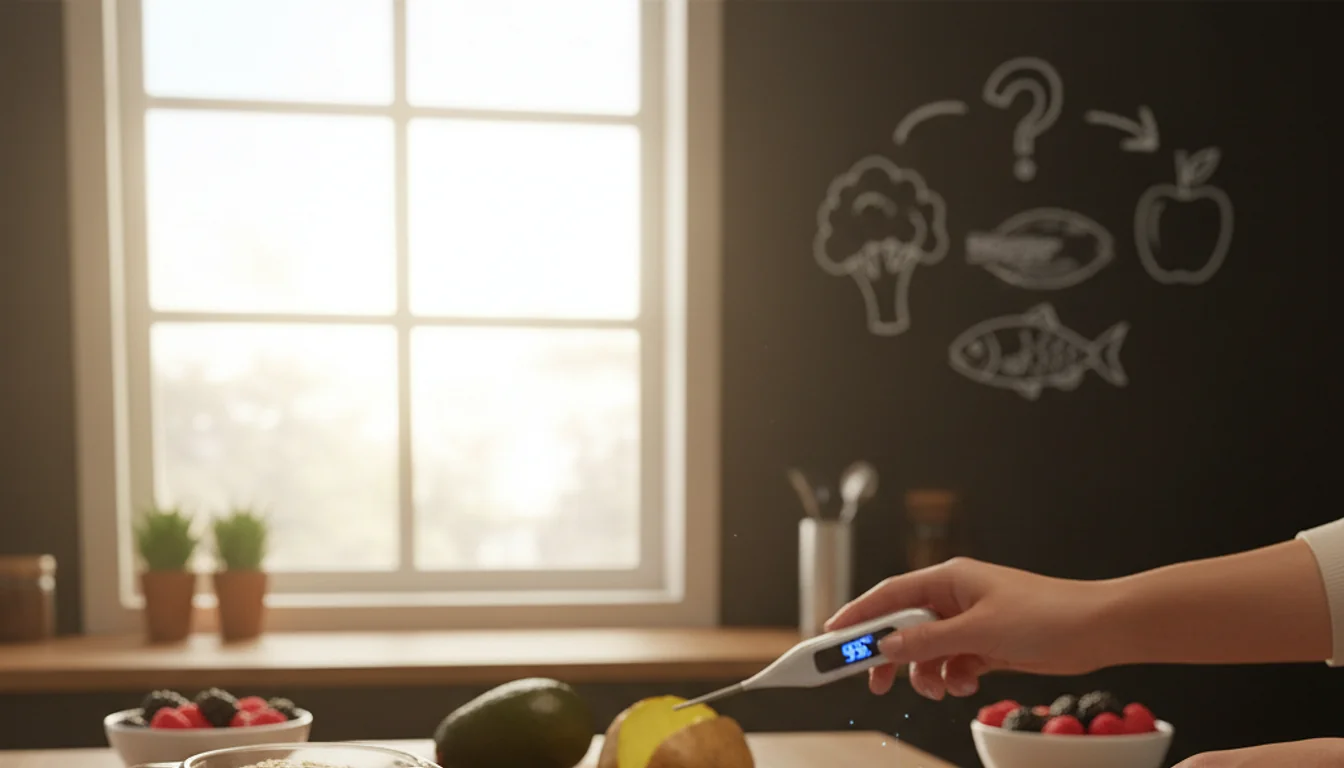






To determine how many calories are in food, manufacturers primarily use the Atwater System, which calculates energy by adding up the fixed values of macronutrients: 4 calories per gram for proteins and carbs, and 9 for fats. While older methods involved literally burning food in a bomb calorimeter to measure heat release, today’s labels are mostly generated through standardized databases. However, because the FDA allows a 20% margin of error, the number you see on a package is often an educated estimate rather than an absolute fact.
Here’s a stat that blew my mind: 84% of people get how do they know how many calories are in food wrong, thinking there is a tiny scientist in every factory burning every single batch of granola. I used to be one of those people. Back in my corporate days in 2022, I was so burnt out that I tried to control my life by tracking every single morsel that entered my mouth. I’d sit in my office, staring at a $14.50 salad from a spot near the Santa Monica Pier, wondering if the “340 calories” on the lid was some kind of divine truth. It wasn’t. It was a guess.
Quick Summary: Most food calories are calculated using the Atwater System (4-4-9 math) or nutritional databases, not by burning food. Labels can legally be off by 20%, meaning your 500-calorie meal could actually be 400 or 600. Focus on food quality rather than perfect precision.
The Science of “Burning” Your Dinner
If you walked into a food science lab forty years ago, you would have seen a machine called a bomb calorimeter. It sounds like something out of a Christopher Nolan movie, but it’s actually quite simple. Scientists would place a dried sample of food inside a sealed container surrounded by water, then ignite it with an electric spark. As the food burned to ash, the water temperature rose. Since one calorie is the amount of energy needed to raise one gram of water by one degree Celsius, they just measured the heat.
Why We Stopped Using the “Bomb”
The problem? Humans aren’t machines. We don’t “burn” food in a flash of fire; we ferment, dissolve, and metabolize it over hours. A bomb calorimeter measures gross energy, but our bodies can’t digest everything. For example, fiber technically has energy, but we poop most of it out. If you burned a piece of wood in a calorimeter, it would show tons of calories, but if you ate it, you’d get almost zero energy. This is why how do you know calories in food becomes a question of biology, not just physics.
💡 Pro Tip Don’t treat your body like a calculator. Your gut microbiome, sleep quality, and even the temperature of your food can change how many calories you actually absorb.
The Atwater System: The Math Behind the Label
Since burning every batch of cookies is expensive and messy, Wilbur Atwater developed a shortcut in the late 19th century that we still use in 2026. He realized that most proteins and carbohydrates average out to 4 calories per gram, while fats are much denser at 9 calories per gram. Alcohol sits at a sneaky 7 calories per gram. Manufacturers simply weigh the components of their food and do the multiplication.
The Database Method
Most small brands don’t even send their food to a lab. They use software like Genesis R&D or NutraSoft. If I’m making a “Healthy Santa Monica Muffin,” I just tell the software I used 50g of almond flour, 10g of honey, and one egg. The software pulls the average values for those ingredients from the USDA National Nutrient Database and spits out a label. It’s efficient, but it assumes every almond is identical. Having lived through a $200k burnout that nearly destroyed my health, I learned that obsessing over these database “averages” was a recipe for anxiety, not wellness.

⚠️ Warning: The FDA allows a 20% variance on nutrition labels. If a snack says it has 200 calories, it could legally contain 240. Over a whole day, those “hidden” calories add up quickly.
I Misread Labels for a Decade: A Nutritionist’s Confession
I remember a specific Tuesday in March 2024. I was standing in the aisle of the Whole Foods on Wilshire Boulevard, staring at a bag of Siete Almond Flour Tortillas ($8.99 at the time). I was trying to figure out if I could afford the calories in three tortillas versus two. I felt like if I got the math wrong, my chronic pain would flare up again. To be honest, it was exhausting.
What I didn’t realize then was that I misread nutrition labels for a decade by assuming they were absolute. I was treating my body like a closed system, ignoring the “Thermal Effect of Food.” It takes much more energy for your body to break down a steak than it does to break down a sugary soda. Even if they both have 200 calories, the net energy your body keeps is vastly different.
The Complexity of Whole Foods
Recent data from a March 2026 study in the Journal of Nutrition Science suggests that ultra-processed foods are absorbed much more efficiently than whole foods. In fact, people eating whole nuts may absorb up to 25% fewer calories than the label suggests because the fat is trapped in the fibrous cell walls of the nut. This is why I always tell my clients in Santa Monica to stop counting “in” and start looking at “quality.”
💰 Cost Analysis
$1.50
$0.85
Why Your Recipe Calories are Probably Wrong
If you’re using a tracking app like MyFitnessPal or Cronometer (which I pay $9.99/month for the gold version), you’ve probably noticed that one “medium apple” can range from 60 to 120 calories depending on which entry you click. This is the biggest hurdle for my clients. They want to know how do they know how many calories are in food they cooked themselves.

When you cook, things change. Water evaporates, concentrating the calories. Or, in the case of pasta, it absorbs water, diluting the calories per gram. If you sear a piece of salmon, some of the fat renders out into the pan. Unless you’re licking the pan clean, those calories didn’t go into your body. This is why recipe calories are probably wrong by at least 10-15% in either direction.
The “Resistance Starch” Loophole
Here’s a trick I learned while healing my own gut. If you cook a potato and then let it cool in the fridge overnight, some of the starch turns into “resistant starch.” Your body can’t digest this as easily, effectively lowering the calorie count of the potato even though the “label” (if it had one) wouldn’t change. It’s a 2026 wellness hack that actually has some solid science behind it. Just like a 2026 report from MindBodyGreen mentioned, tiny shifts in food preparation can change the metabolic outcome significantly.
Is Tracking Actually Worth the Stress?
I’ve spent thousands of dollars on gadgets—from the Oura ring to a $400 food scale that I eventually threw in the trash because it made me miserable. that said,, tracking can be a useful temporary tool. It’s like a budget; you don’t need to track every penny for the rest of your life, but doing it for a week can show you where the “leaks” are.
However, you have to ask yourself: is the precision helping you, or is it fueling a new kind of burnout? In my experience, the more I obsessed over whether a piece of chicken was 4.2 ounces or 4.5 ounces, the more my chronic pain flared. Stress is a metabolic toxin. According to a 2025 Harvard Medical study, high cortisol levels can actually slow your metabolism, potentially negating the 50 calories you were trying so hard to save.
Practical Steps to Navigate the Numbers
If you still want to keep an eye on the numbers without losing your mind, here is how I suggest you approach it in 2026. This is the exact protocol I gave to my friend Jenny last month when she was struggling with “label anxiety” after seeing a report about ultra-processed baby foods and realizing how misleading labels can be.
- Use a Scale, Not a Cup: Volume measurements (like cups) are notoriously inaccurate. A “cup” of flour can vary by 30 grams depending on how tightly you pack it.
- Prioritize Raw Ingredients: If you buy a bag of frozen broccoli, the calorie count is much more likely to be accurate than a “broccoli cheddar bake” with twenty ingredients.
- The 80/20 Rule of Tracking: Track your protein and fiber. If you get those right, the calories usually take care of themselves.
- Trust Your Hunger: If the app says you’ve eaten enough but your stomach is growling, eat more. The app doesn’t know you had a stressful meeting or a poor night’s sleep.
I remember sitting in a gross hotel bathroom in Vegas back in 2023, trying to log a “buffet dinner” into my phone. I was miserable. I realized then that the numbers were a cage. Now, I live in Santa Monica, I eat real food, and I use the labels as a general guide, not a law.

✅ Key Takeaways
- Calories are calculated via the Atwater System (4-4-9), not by burning food. – Labels have a legal 20% margin of error—they are estimates, not facts. – Whole foods often have “fewer” net calories because of the energy required for digestion. – Cooking methods and cooling (resistant starch) can change calorie availability. – Use tracking as an educational tool, not a lifelong obsession.
🔗 Affiliate Disclosure
I am a certified nutritionist, but I am not your doctor. This content is for informational purposes only and is not a substitute for professional medical advice, diagnosis, or treatment. Always seek the advice of your physician before starting any new diet or exercise program.
That’s the story. Make of it what you will.