






Estimated Reading Time: 8 minutes
EEer felt like you need a secret decoder ring just to navigate the grocery store? You’re not alone.
Faced with a dizzying array of products, packed with unfamiliar terms, it’s easy to feel lost when trying to make healthy choices.
But what if I told you there’s a simple key to unlock the nutritional secrets hidden on every food package?
That key, my friends, is learning how to read nutrition labels.
This isn’t just about counting calories; it’s about empowering yourself to make informed decisions and take control of your health in 2025 and beyond.
As a health enthusiast myself, I’ve spent countless hours poring over nutrition labels, trying to understand what’s *really* in the foods I eat.
It’s been a journey, filled with its share of head-scratching moments, but also a lot of’aha!’revelations.
I’m excited to share what I’ve learned, breaking down the often-intimidating information into easy-to-digest concepts.
Because let’s be honest, healthy eating shouldn’t feel like rocket science. It should feel empowering.
So, what exactly *is* on a nutrition label? It’s more than just a list of ingredients and a bunch of numbers.
It’s a window into the nutritional profile of a food product, offering valuable insights into its overall impact on your health.
The key components you’ll find include:
It sounds like a lot, right? But fear not! We’ll break each element down, making it understandable and applicable to your daily life.
Knowing how to read nutrition labels empowers you to choose foods that align with your health goals, whether that’s managing weight, boosting energy levels, or simply feeling your best.
Let’s start with the basics: serving sizes and calories. These are your foundational pieces.
The serving size tells you the amount of food the rest of the information is based on. Is it one cookie or two? A half-cup of cereal or a full cup?
Make sure you check this *first*. It can drastically change the numbers you’re looking at.
For example, a bag of chips might *seem* like a reasonable snack with 150 calories per serving.
But if you’re like me and tend to mindlessly eat straight from the bag, you might be consuming several servings without realizing it.
I once polished off a bag of trail mix, thinking I was being’healthy,’only to discover I’d eaten three servings! Oops.
Calories, of course, tell you how much energy you’re getting from each serving.
Consider your individual calorie needs based on your activity level, age, and health goals.
Paying attention to serving sizes and calories are your first steps on how to read nutrition labels and make informed choices.
Next up: the macronutrients. These are the big players when it comes to nutrition. Fat, carbohydrates, and protein provide your body with energy.
Understanding their roles is key to optimizing your diet.
Fats get a bad rap, but they’re essential for health. You’ll find information on total fat, saturated fat, and trans fat. The type of fat matters.
Saturated and trans fats should be limited, while healthy fats (like those found in avocados and nuts) are beneficial.
I recommend checking out Mayo Clinic for more information on good and bad fats.
Reading nutrition labels helps you choose sources of healthy fats and minimize unhealthy ones.
Carbohydrates are your primary energy source. The label will list total carbohydrates, including sugars and fiber.
Focus on getting most of your carbs from whole foods like fruits, vegetables, and whole grains.
Be mindful of added sugars, which can contribute to weight gain and other health problems.
Checking sugar content is a crucial part of knowing how to read nutrition labels effectively.
Protein is essential for building and repairing tissues. Make sure you’re getting adequate protein from lean sources, especially if you’re active.
Keep an eye on how much protein you’re getting in one serving size, because it can be an important factor when you are checking out how to read nutrition labels.
Sugar, as we know, can be sneaky. It hides in all sorts of processed foods, often under multiple aliases.
When learning how to read nutrition labels, pay close attention to the “Added Sugars” line.
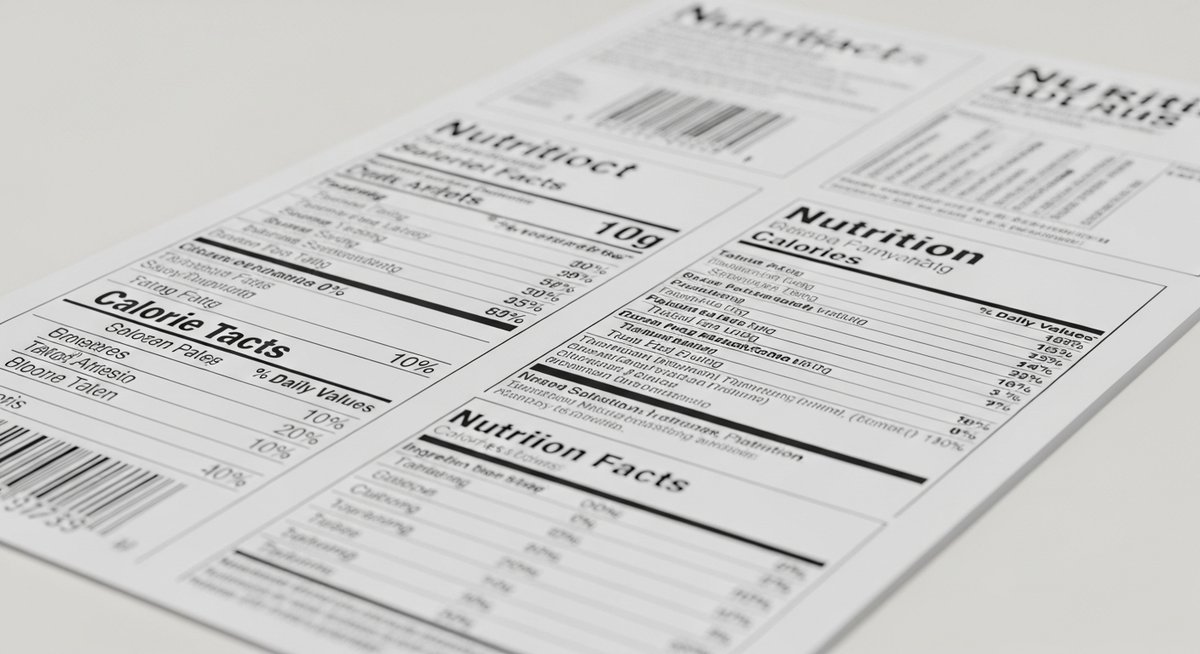
This tells you how much sugar has been added during processing.
The American Heart Association recommends that women limit added sugars to no more than 25 grams per day and men to no more than 36 grams.
Be a smart consumer and don’t be fooled by clever marketing. Always look closely at the label.
A quick tip: the ingredient list can be just as telling.
Ingredients are listed in order of predominance by weight, so if sugar or any of its many forms (high-fructose corn syrup, dextrose, etc.) is near the top of the list, that food is likely high in added sugars.
A balanced diet and knowing how to read nutrition labels are key to helping keep your blood sugar at the right level.
The %DV is your quick guide to how a serving of food contributes to your daily diet. It’s based on a 2,000-calorie diet, so it’s a general guideline.
A %DV of 5% or less is considered low, while 20% or more is considered high. Use this as a handy tool to compare foods and make informed choices.
For example, if you’re trying to limit sodium intake, look for foods with a lower %DV for sodium.
Now that you know the key components, here are some practical tips to help you become a nutrition label pro:
I once had a friend who was struggling with weight loss. She thought she was eating healthy, but wasn’t quite seeing the results.
After helping her understand how to read nutrition labels, we discovered she was regularly consuming oversized portions of foods that seemed healthy, but were also high in hidden calories and added sugars.
Once she adjusted her portion sizes and focused on nutrient-dense foods, she saw a noticeable difference.
It was a true’lightbulb’moment for her, and it can be for you, too.
Beyond individual health, learning how to read nutrition labels can be part of a broader commitment to ethical and social responsibility.
Knowing the nutritional content of the food you consume can influence your choices for both your health and sustainability.
For example, when reading nutrition labels, you can choose foods that are ethically sourced or support sustainable agriculture.
You can also make more informed choices about packaging and food waste.
So, there you have it: a crash course on how to read nutrition labels.
Remember, this isn’t just about memorizing numbers; it’s about empowering yourself to make choices that support your health and well-being.
By understanding the basics – serving sizes, calories, macronutrients, and the %DV – you can navigate the grocery store with confidence and build a healthier lifestyle.
The food industry can be very confusing, but armed with the knowledge of how to read nutrition labels, you will be well prepared.
My advice? Start small. Pick up a few items in your pantry and practice reading the labels. Compare similar products. Ask questions.
The more you practice, the more natural it will become. And before you know it, you’ll be a nutrition label ninja! What’s the next step?
Head to your pantry and take a look. You might be surprised at what you discover!
If you’re interested in going further, sign up for our weekly health tips and you’ll get regular advice sent straight to your inbox!
Frequently Asked Questions
How accurate are nutrition labels?
Nutrition labels are generally accurate, but there can be some wiggle room. The FDA allows for some variance, particularly in the amounts of micronutrients. However, for the most part, the information on the label is a reliable guide.
Pay attention to the serving size, as this has the biggest impact on the numbers you see. If you’re really curious, compare the numbers to other similar products and see if there are any significant differences.
What if a food product doesn’t have a nutrition label?
Most packaged foods are required to have nutrition labels. If you’re unsure, ask the food manufacturer or consult a reliable online database. For fresh produce and unpackaged foods, there might not be a label. You can then research common nutritional values online or use a food tracking app for estimates.
With things like fresh produce, the label would be more of a general idea and less exact as with a packaged food.
Are’healthy’food claims on packaging always accurate?
Not always. Food manufacturers can use terms like “healthy,” “low-fat,” or “organic” to market their products, but it’s important to look beyond the claims and examine the nutrition label. A food might be low in fat but high in added sugars.
Knowing how to read nutrition labels allows you to make your own informed decision, regardless of the marketing claims. Don’t let those words fool you. Always look at the nutrition facts.
How do I deal with conflicting information on nutrition labels?
Sometimes, different products with similar ingredients might have slightly different nutritional information. In these cases, compare the key nutrients that are most important to you, like sugar, sodium, or saturated fat, and make your decision based on your personal health goals.
Focus on the big picture and don’t get hung up on small discrepancies, they aren’t going to make or break your health journey.
Can understanding nutrition labels help with weight management?
Absolutely! Nutrition labels provide valuable information for weight management. By paying attention to serving sizes, calories, and macronutrient content, you can make informed choices about portion control and the types of foods you consume.
They can help identify which foods are high in calories but low in nutrients, allowing you to prioritize nutrient-dense options.
What are some of the biggest misconceptions about nutrition labels?
One common misconception is that all calories are created equal. While calorie counts are important, the source of those calories matters. Another is that low-fat foods are always healthy. They may be lower in fat, but can be higher in sugar.
A third misconception is that the nutrition facts are always accurate, which isn’t always the case, but close enough for practical use. Focus on whole, unprocessed foods and use labels to help you.
![moment for live more mindfully every day: a practical guide [2025]](https://www.trendynutritionhub.com/wp-content/uploads/2025/11/temp_moment_1763514992.webp)
![reduce for best anti-inflammatory foods for daily meals [your inflammation-fighting guide]](https://www.trendynutritionhub.com/wp-content/uploads/2025/11/temp_reduce_1763514597.webp)
![healthy eating habits for clean eating tips for busy people [2025]: fuel your life!](https://www.trendynutritionhub.com/wp-content/uploads/2025/11/temp_healthy_eating_habits_1763343757.webp)
![probiotics for boost your gut health: what to eat for a happy belly [2025]](https://www.trendynutritionhub.com/wp-content/uploads/2025/11/temp_probiotics_1763343659.webp)