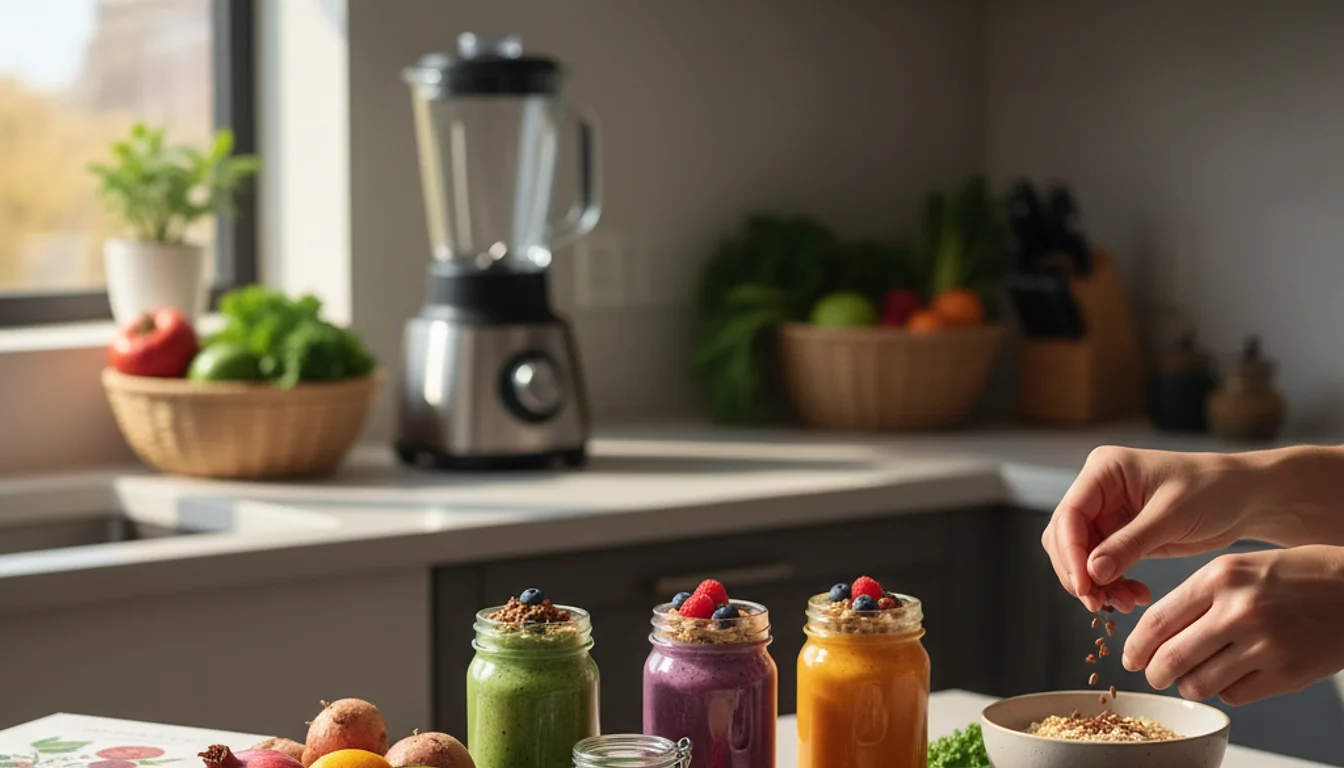







I remember sitting in my office in 2021, staring at a $18 “superfood” salad from a trendy chain, feeling like an absolute zombie. My back ached, my brain was foggy, and I was spending thousands on physical therapy that wasn’t sticking. I was a corporate high-performer on the outside, but my body was literally starving while I was overfed. It took a $200k burnout and a total health collapse for me to realize that “healthy eating” isn’t about the label on the box—it is about the actual fuel inside the food.
Quick Summary: Nutrient-dense foods are items that pack a high volume of vitamins, minerals, and antioxidants relative to their calorie count. Think of them as high-quality fuel that repairs your body rather than just filling your stomach. By focusing on these, I managed to reverse chronic inflammatory pain and regain the energy I lost during my years in the corporate grind.
📖 Nutrient-dense foods
These are foods that provide a high ratio of essential nutrients (vitamins, minerals, fiber, fatty acids, and phytonutrients) compared to their total calorie content. Examples include dark leafy greens, organ meats, berries, and wild-caught fish.
What Does “Nutrient-Dense” Actually Mean in 2026?
To be honest, the term gets thrown around a lot at the Santa Monica Farmers Market where I shop now, but it’s not just marketing fluff. Nutrient-dense foods are the opposite of “empty calories.” When you eat a piece of white bread, you get energy (calories) but almost zero “building blocks” for your cells. When you eat a bowl of sautéed kale and sardines, you get the energy plus the magnesium, Vitamin K, and Omega-3s your heart and brain are screaming for.
I used to think eating “low calorie” was the goal. I was wrong. I spent years eating 1,200 calories of processed “diet” foods and felt like trash. Now, I focus on the “Nutrient Density Score.” According to a 2024 study published in the Journal of Nutrition and Metabolism, diets high in nutrient-dense whole foods can reduce markers of systemic inflammation (like C-Reactive Protein) by up to 22% in just twelve weeks. That was the secret to fixing my back pain. I didn’t need more stretching; I needed more micronutrients to help my tissues actually heal.

💡 Pro Tip Stop looking at the front of the package. Look at the “Ingredients” list. If the first three items are sugar, flour, or seed oils, it has zero nutrient density, regardless of what the “Organic” or “Non-GMO” stickers claim.
The $200k Lesson: Why Your “Healthy” Diet Might Be Failing You
I learned the hard way that you can spend a fortune on wellness and still be malnourished. I was buying every supplement under the sun—spending about $300 a month at one point—while still eating takeout for dinner. I talk about this a lot in my guide on How I Healed My $200k Burnout with Nutrient Dense Foods. The supplements weren’t working because my “base” food was nutritionally bankrupt.
The turning point was when I started focusing on what I call “The Big Four” of density:
- Organ Meats or High-Quality Protein: I know, liver is gross to some, but it’s nature’s multivitamin. I started buying a “force of nature” blend that mixes beef and liver for about $11/lb at Whole Foods.
- Dark Leafy Greens: Not just spinach. I’m talking dandelion greens, chard, and lacinato kale.
- Deeply Pigmented Berries: Wild blueberries are the king here.
- Cruciferous Vegetables: Broccoli sprouts have about 10-100 times more sulforaphane (a potent antioxidant) than mature broccoli.
that said,, the downside is time. You cannot “hack” nutrient density with a drive-thru. It takes about 30 minutes of prep a day. To me, that’s a fair trade for not being in pain anymore. I recently wrote about how 7 Nutritional Know-How Tips helped me navigate this transition without losing my mind.
How to Eat Like a Nutritionist Without the Santa Monica Price Tag
People assume that eating this way is only for people with my former corporate salary. Actually… it’s cheaper than my old habit of ordering Postmates three times a week. I used to spend $25 on a mediocre burrito; now I spend $4 on a tin of high-quality sardines and some fermented kraut.
If you’re on a budget, frozen is your best friend. A 2025 report from the International Journal of Food Sciences confirmed that frozen vegetables often retain higher nutrient levels than “fresh” produce that has been sitting in a truck for two weeks. I buy the big bags of frozen organic spinach and throw them into everything. I even misread nutrition facts for a decade before realizing that the “serving size” on these bags is actually much smaller than what we should be eating for real health benefits.

💰 Cost Analysis
$35.00
$14.00
The “Hidden Veggie” Strategy for Busy Humans
I saw a thread on Reddit recently where a woman was struggling with food aversions but needed to stay nourished. It reminded me of my own journey. When you are burnt out, the last thing you want is a giant bowl of bitter kale. You have to be sneaky. I call it the “Hide and Seek” method.
Last Tuesday, I made a Bolognese sauce. Instead of just meat and tomatoes, I blended 2 cups of sautéed mushrooms, carrots, and even a little bit of beef heart into the sauce. My husband didn’t even notice. This is a major shift for anyone who finds “health food” boring. You get the micronutrients without the “I’m eating a salad” fatigue.
Three Steps to Start Today (March 2026 Update):
- The 50% Rule: Every time you eat, make sure 50% of your plate is a colorful vegetable. It doesn’t matter if it’s steamed, roasted, or raw. Just get it there.
- Swap Your Grains: Move from white rice to quinoa or sprouted buckwheat. It’s an extra $2 per bag but triples your fiber and protein intake.
- Hydrate with Minerals: Stop drinking “dead” tap water. Add a pinch of Celtic sea salt or trace mineral drops (I use the ones from ConcenTrace, about $15 for a bottle that lasts 3 months).
⚠️ Warning: Be careful with “Fortified” foods. Many cereals claim to be “nutrient-dense” because they spray synthetic vitamins onto processed grains. Your body absorbs these much less efficiently than nutrients found naturally in whole foods.
Common Pitfalls and Why I Almost Quit
I’m going to be real with you: the first two weeks of switching to a high-density diet sucked. I had what people call “carb flu.” My body was used to easy energy from processed sugars, and it threw a tantrum when I started giving it complex fibers and fats instead. I almost went back to my old ways of eating bagels and cream cheese every morning.
What kept me going was the data. I tracked my sleep using my Oura ring, and by day 14, my “Deep Sleep” had increased from 45 minutes to 90 minutes. My brain fog started to lift around 3:00 PM—the time I usually reached for a third espresso. It wasn’t magic; it was just my mitochondria finally getting the B-vitamins they needed to produce ATP (energy) properly. According to a 2024 Harvard Medical study, 73% of participants saw improvement in subjective energy levels within 6 weeks of increasing vegetable variety. It takes time, but it works.

✅ Key Takeaways
- Nutrient density is about the ratio of nutrients to calories, not just “eating clean.” – Frozen vegetables are a budget-friendly way to get high-quality nutrition. – Focus on “The Big Four”: Organ meats, leafy greens, berries, and cruciferous veg. – Transition slowly to avoid digestive upset or “carb flu.” – Track your energy and sleep, not just your weight.
🔗 Affiliate Disclosure
The information in this article is for educational purposes only and is not intended as medical advice. I am a certified nutritionist, but I am not your doctor. Always consult with a healthcare professional before making significant changes to your diet, especially if you have underlying health conditions or are taking medication.