






🔗 Affiliate Disclosure
I am a certified nutritionist, but I am not your doctor. This content reflects my personal journey and professional observations. Always consult a healthcare provider before making radical changes to your diet or supplement routine.
Quick Summary: Most “Superfood Spotlight tips” you see on TikTok are marketing garbage designed to separate you from your money. Real superfoods are often cheap, unglamorous, and already in your pantry. Stop chasing $100 green powders and start focusing on nutrient density and bioavailability.
Who the hell started spreading all these myths about Superfood Spotlight tips? Seriously, I’m sitting here in my Santa Monica apartment, looking at a $14.50 latte that promised to “align my chakras” with blue-green algae, and I’m about to lose it. I spent ten years in corporate finance, grinding myself into a fine powder until my body literally quit on me. I had chronic back pain that felt like a hot poker, and my brain felt like it was encased in concrete. When I finally quit, I went down the “wellness” rabbit hole, spending thousands on every “superfood” I could find.
Most of it was a lie. I’m 36 now, and after becoming a nutritionist, I’ve realized that the industry thrives on your confusion. They want you to think you need the exotic berry from the Amazon when you actually just need a bag of frozen spinach and some decent sleep. Last Tuesday, I saw a brand charging $89.99 for a “proprietary” mushroom blend that was 90% brown rice filler. That’s not health; that’s a scam. If you’re tired of the fluff, let’s get into what actually matters for your body in 2026.
1. Stop Buying the “Exotic” Marketing Hype
Marketing departments love a good origin story. If a fruit grows on a cliffside that only three monks can reach, they can charge you $40 an ounce for it. But here’s the reality: your body doesn’t care about the story. It cares about the molecular structure of the nutrients. I remember back in November 2024, I was obsessed with dragon fruit because I thought it was the key to my skin issues. I was spending $7.99 per fruit at the Whole Foods on Wilshire. My skin didn’t change, but my bank account did.
The Bioavailability Trap
Just because a food has a high concentration of a vitamin doesn’t mean you’re actually absorbing it. A 2024 study published in the Journal of Nutrition and Metabolism found that many “superfood” powders have such low bioavailability due to processing that your body just flushes them out. You’re literally peeing away your paycheck. I learned this the hard way when I realized my $156.47 monthly supplement habit wasn’t doing half as much for my energy as eating three eggs a day did.
💡 Pro Tip Always pair fat-soluble vitamins (A, D, E, K) with a healthy fat like avocado or olive oil. If you’re taking a “superfood” powder with just water, you’re wasting your time.
2. The Truth About Green Powders
If I see one more influencer swirling a glass of swamp-water-looking liquid and claiming it replaced their entire vegetable intake, I might scream. Green powders are the ultimate “lazy person’s” superfood, and they are almost always overpriced. I used to use Athletic Greens (AG1) religiously. It’s not a bad product, but at over $3.00 per serving, is it really “super”?
What the Labels Don’t Tell You
Most of these powders use “proprietary blends.” This is code for: “We don’t want to tell you how little of the expensive stuff is actually in here.” You might see Reishi mushroom on the label, but it could be 0.001mg. You’re mostly drinking flavored grass. When I was recovering from my burnout, I realized that my body responded much better to actual, fibrous vegetables that fed my gut microbiome. Powders don’t have the fiber your gut needs to thrive.
3. Your “Superfood” Smoothie is Probably a Sugar Bomb
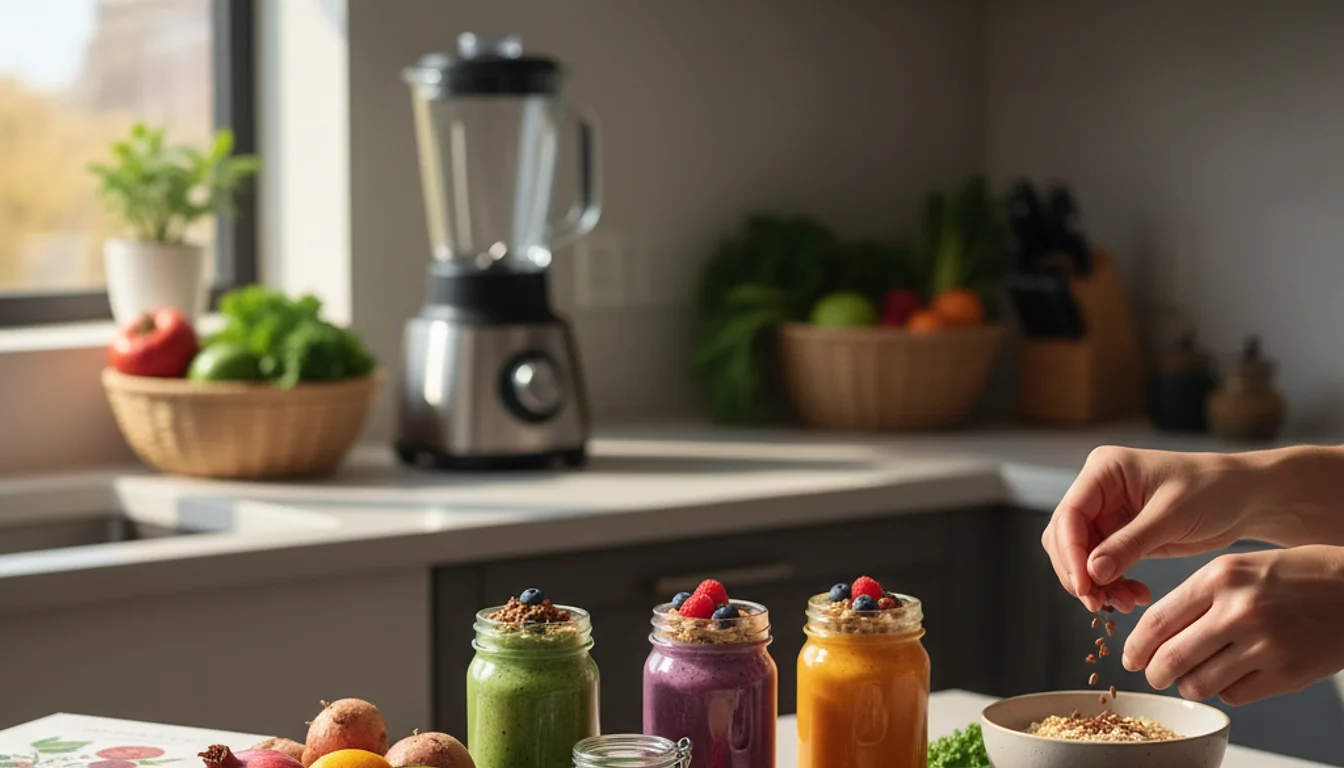
I see this in my Santa Monica clinic every single day. Clients come in wondering why they can’t lose weight or why their energy crashes at 2 PM, despite drinking a “superfood” smoothie for breakfast. Usually, it’s because that smoothie contains two bananas, a cup of mango, sweetened almond milk, and a “superfood” honey. That’s not a meal; it’s a dessert. A recent discussion on r/Smoothie101 highlighted how people often over-rely on frozen fruit without adding enough protein or fat to stabilize blood sugar.
The Glucose Spike is Real
When you liquidize fruit, you’re making the sugar much more accessible to your bloodstream. Even “super” fruits like acai can cause a massive glucose spike if not balanced. I used to go to this place in Echo Park and spend $16.50 on an acai bowl covered in granola and honey. I’d feel amazing for twenty minutes, then I’d want to take a nap under my desk for three hours. If you want brainpower, you need stability, not a sugar rush.
⚠️ Warning: Never drink a fruit-only smoothie on an empty stomach. It’s a one-way ticket to insulin resistance and “hangry” outbursts by noon.
4. The Unsexy Superfoods You’re Ignoring
Why does no one talk about sardines? Or beef liver? Or fermented cabbage? Because they aren’t “pretty” on Instagram. But if we’re talking about Superfood Spotlight tips that actually work, we have to talk about nutrient density. A 2025 report from the Linus Pauling Institute confirmed that organ meats and small oily fish contain higher concentrations of essential vitamins than almost any plant-based “superfood” on the market.
The Power of Fermentation
I spent $23.47 on a bottle of “probiotic juice” last month just to test it. It was garbage. It had 20 grams of sugar and very little live bacteria. You know what worked better? The $5.00 jar of raw sauerkraut I bought at the farmer’s market. I started eating two tablespoons a day, and my bloating—which had plagued me since my corporate days—vanished in two weeks. It’s not glamorous, and it smells like a locker room, but it works. I even wrote about this in my honest 2026 superfood guide because people need to stop overcomplicating their gut health.
My “Ugly” Superfood List:
- Sardines: Packed with Omega-3s and Vitamin D. Cost: about $2.50 a tin.
- Bone Broth: Not the boxed stuff, but the stuff you make from $4.00 worth of marrow bones. Great for gut lining.
- Pumpkin Seeds: A magnesium powerhouse. I get a huge bag at Costco for under $15.00.
- Dandelion Greens: Amazing for liver detox. You can literally find them in your yard (but buy the organic ones for $3.00 instead).
5. How Your Lifestyle Nullifies Superfoods
You cannot “superfood” your way out of a toxic lifestyle. I tried. During my burnout, I was taking $400 worth of supplements a month while sleeping four hours a night and drinking six cups of coffee. I thought the “superfoods” would save me. They didn’t. My body was in a constant state of fight-or-flight, which meant I wasn’t even digesting the expensive nutrients I was consuming.
The Cortisol Connection
High cortisol (the stress hormone) actively inhibits digestion. If you’re stressed while eating your kale salad, you might as well be eating cardboard. I had to learn to breathe—actually breathe—before meals. It sounds like hippie nonsense, but it’s physiology. My friend Maria from work used to eat her “superfood” lunch while typing emails; she had the worst acid reflux I’ve ever seen. Once she started taking 10 minutes to just sit and eat, her symptoms improved by 50% without changing a single ingredient.
💰 Cost Analysis
$250.00
$0.00
6. Spotting the 2026 Marketing Scams
As we head into 2026, the marketing is getting sneakier. We’re seeing “AI-personalized” superfood blends that are really just basic multivitamins with a fancy UI. Don’t fall for the “spotlight” treatment. Just because a celebrity is holding a bottle doesn’t mean it’s the reason they look like that. They look like that because they have a personal chef, a trainer, and probably a very good dermatologist.
The “Natural” Fallacy
Just because something is “natural” doesn’t mean it’s safe or effective in high doses. I once overdid it with turmeric supplements (thinking more is better) and ended up with thinned blood and bruising. I was using a brand called Thorne, which is excellent, but I was ignoring the dosage instructions because I was desperate. Stick to the science, not the “vibes.”
✅ Key Takeaways
- Focus on whole foods over processed powders. – Balance smoothies with protein and healthy fats. – Don’t ignore “unsexy” foods like sardines and fermented veggies. – Address stress and sleep first, or superfoods won’t matter. – Always check the “bioavailability” of your supplements.
That’s all I’ve got. The rest is on you. Stop looking for a miracle in a bottle and start looking at what’s actually on your plate. Health isn’t found in a “spotlight” tip; it’s found in the boring, consistent choices you make every single day. Now, if you’ll excuse me, I have a very expensive, very blue latte to finish—and then I’m going back to my $0.50 spinach.